
Ways to Handle Panic Attacks When You Are Alone
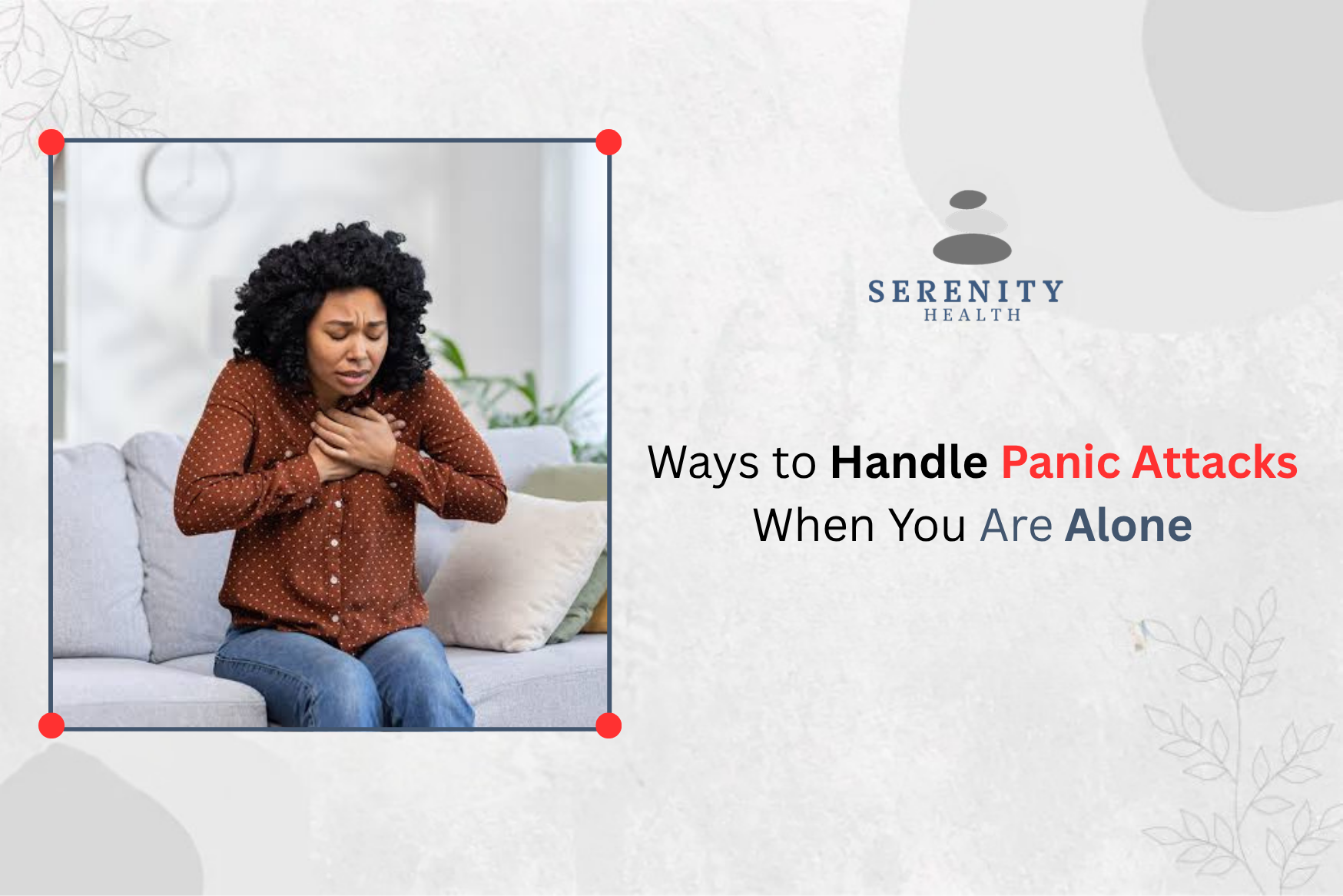
Have you ever felt your heart race suddenly? Or maybe you felt a sensation where you couldn't catch your breath? This can be very scary. It may be a panic attack. A panic attack is a strong feeling of fear that happens suddenly. Panic attacks can happen, even if you are safe.
Panic can be extra difficult when you are alone. You might feel like no one can help you, but you can help yourself. There are simple steps you can take to feel better.
We work together with our patients at Serenity Health LLC. We teach people to manage anxiety and panic attacks. We use proven medication and focus on patient needs.
Let us look at simple ways to handle panic attacks when you are alone.
Recognizing the Signs
A panic attack can start quickly and can also feel very strong.
You may feel:
Fast heartbeat
Sweaty hands
Shaking body
Tight chest
Hard breathing
Dizzy feeling
Scared thoughts
It can feel like it will never stop, but it always does. Most panic attacks last only a short time.
Your body is likely safe, even if it does not feel safe.
Ways to Handle Panic Attacks When You Are Alone
If you have a panic attack when you are alone, try these simple steps:
1. Remind Yourself That You Are Safe
Your mind thinks you are in danger, triggering a "fight-or-flight" response. This can cause a feeling of panic.
Tell yourself:
“I am safe right now.”
“This feeling is uncomfortable, but it will pass.”
“My body is just experiencing stress.”
Try not to fight the feeling; rather, let it wash over you and leave like a wave.
2. Practice the 4-2-6 Breathing Method
Hyperventilating can increase panic. Regulate your oxygen levels on this easy breathing pattern:
Breathe in slowly through your nose for 4 seconds
Hold your breath for 2 seconds
Breathe out slowly through your mouth for 6 seconds
Do this again and again. Keep going until your body starts to feel calm and relaxed.
3. Use the "5 Senses" Grounding Approach
Bring your focus away from internal fear and back to the physical world around you. Identify:
5 things you can see
4 things you can touch
3 things you can hear
2 things you can smell
1 thing you can taste
You can say them slowly in your mind.
For example:
I see a chair
I see a window
I hear a fan
I feel my shirt
I smell soap
This helps your brain feel grounded again.
4. Engage in Slow, Mindful Movements
Panic creates a buildup of excess adrenaline. Release it safely without rushing your heart rate:
Roll your shoulders gently or wiggle your fingers and toes.
Stretch your arms upward.
Walk slowly across the room, or practice standing up and sitting down deliberately.
5. Anchor Yourself Through Physical Touch
Holding a tangible object brings your attention back to reality. It could be:
A pillow
A soft cloth
A cold bottle of water
A chair or table
Your own hands
Focus heavily on its texture, weight and temperature.
6. Adjust Your Environment
Sit Comfortably
Sit comfortably with back support or lie down if needed.
Sip Cold Water
Sip cold water slowly to focus your mind.
Gently Distract Your Mind
Distract yourself by counting backward or picturing a calm place in your mind’s eye.
What to Do After the Attack Passes
After the panic fades, you may feel physically and emotionally drained. Your body has worked hard. Take time to recover:
Rest or lie down in a quiet room
Drink warm tea or water
Take a slow, comforting shower
Write down what happened to help process the event
Long-Term Prevention & Support
Creating a balanced nervous system is not only a crisis response practice; it's a daily practice that can occur throughout the day. Try to incorporate:
Consistent sleep schedules
Nutrient-dense, regular meals
Short, daily walks in fresh air
Limiting intake of caffeine, energy drinks, and coffee
Carving out quiet time to unwind
Professional Support with Serenity Health
Serenity Health (located in Carmel, Indiana) provides personalized care. We help manage panic attacks and improve coping skills. Our practice makes mental health care accessible and stress-free through:
Telehealth visits (after your initial in-person appointment)
GeneSight testing to help choose medications
Flexible appointment times
An easy-to-use online patient portal
We are here to help you feel your best.
Final Thoughts
Panic attacks can feel very scary, but they do not last forever.
Each time you use calming skills, you help your brain learn that you are safe. With practice and support, you can feel better.
If panic disrupts your daily routine, Serenity Health is ready to assist. Our team is dedicated to your well-being. We provide treatment options, outpatient medication management, and personalized care tailored to your individual needs.
Reach out to us to experience increased calm and support.
FAQs
Can a panic attack hurt my heart?
No. Panic attacks do not usually hurt your heart. If you have strong chest pain, get medical help.
Can panic attacks go away?
Yes. With help and good habits, many people have fewer or no panic attacks over time.